


Artificial intelligence is changing how businesses operate, how people access information, and how technology solves complex problems. Behind many of these developments is a specialized computing facility designed to process enormous amounts of data and support demanding AI workloads. These facilities are known as AI data centers.
But what is an ai data center, and how is it different from a traditional data center? In simple terms, an AI data center is a facility equipped with powerful computing hardware, high-speed networks, advanced storage systems, reliable electrical infrastructure, and specialized cooling technology. Together, these resources help train AI models, run applications, and generate responses to user requests.
Unlike conventional facilities that support everyday business applications, AI data centers are designed to handle computationally intensive tasks. For example, they can process billions of calculations, analyze large datasets, and support generative AI tools. As a result, they have become an important part of the technology infrastructure behind modern artificial intelligence.
This guide explains how AI data centers work, which components they need, how businesses use them, and why energy efficiency is becoming increasingly important.
What Is an AI Data Center?
An AI data center is a physical facility that houses specialized computer systems designed to develop, train, and operate artificial intelligence applications. It contains servers, graphics processing units (GPUs), networking equipment, storage systems, power infrastructure, and cooling technology.
Traditional data centers support websites, databases, business software, cloud storage, and other digital services. However, AI workloads often require a different level of computing performance. Training a large language model, for instance, involves processing extensive datasets and performing complex mathematical operations across many processors.
Therefore, AI data centers are commonly built around powerful accelerators, especially GPUs and other specialized AI chips. These processors can handle many calculations simultaneously, making them suitable for machine learning and deep learning workloads.
An AI data center is not simply a room filled with powerful computers. Instead, it is an integrated environment in which computing, networking, electricity, cooling, and software must work together. If one part cannot keep up, the performance of the entire system may suffer.
How Is an AI Data Center Different From a Traditional Data Center?
Although both facilities store and process digital information, their infrastructure requirements can be quite different.
A traditional data center may primarily run websites, enterprise applications, email systems, and databases. These workloads often rely heavily on central processing units (CPUs), conventional storage, and standard networking infrastructure.
By comparison, AI workloads can require much greater parallel computing capacity. Consequently, AI facilities often use large groups of GPUs or other accelerators that work together on complex tasks.
Here are the main differences:
| Feature | Traditional Data Center | AI Data Center |
|---|---|---|
| Main workloads | Websites, databases, business applications | AI training, inference, machine learning |
| Computing hardware | Primarily CPUs | GPUs, AI accelerators, and CPUs |
| Networking | Standard enterprise networking | High-speed, low-latency interconnects |
| Cooling requirements | Conventional air and facility cooling | Advanced air or liquid cooling, depending on workload |
| Power demand | Varies by application and facility size | Can be especially high for dense AI computing clusters |
| Data processing | General-purpose computing | Large-scale parallel and AI-focused processing |
Nevertheless, the distinction is not absolute. Modern data centers can support both traditional and AI workloads. The difference is mainly the type, density, and scale of infrastructure required to run demanding AI systems efficiently.
Key Components of an AI Data Center
An AI data center depends on several connected infrastructure layers. Each layer performs a specific function, and all of them contribute to reliable AI computing.
1. GPUs and AI Accelerators
GPUs are among the most important components of modern AI infrastructure. Originally developed to handle graphics processing, GPUs are also highly effective at performing the parallel mathematical operations used in machine learning.
For example, training a large AI model requires repeated calculations across enormous datasets. Rather than processing every operation sequentially, GPUs can perform many operations simultaneously. Consequently, they can accelerate certain AI workloads significantly.
AI facilities may also use specialized processors such as tensor processing units (TPUs) and other application-specific accelerators. These chips are designed to handle particular types of AI calculations.
However, processors alone do not determine performance. Memory capacity, data movement, software compatibility, and the way processors communicate with one another also matter.
2. High-Speed Networking
AI models often require multiple servers to work together. Therefore, the network connecting those servers must transfer information quickly and reliably.
High-speed networking allows GPUs to exchange data during training and coordinate their work across computing clusters. In addition, low-latency connections help reduce delays when processors need to share information.
Technologies such as high-performance Ethernet and InfiniBand are used in some AI environments. The right networking design depends on the workload, system architecture, and performance requirements.
Without effective networking, powerful processors may spend valuable time waiting for information. As a result, network performance can directly affect how efficiently an AI data center uses its computing resources.
3. Storage Systems and Data Pipelines
AI applications need access to large amounts of information. These datasets may include text, images, videos, audio, business records, and scientific measurements.
Storage systems keep this information available for model training, evaluation, and inference. However, storing data is only one part of the process. The facility must also move information from storage to computing hardware without creating unnecessary delays.
For this reason, AI data centers may use high-performance solid-state drives, distributed storage platforms, and data management systems.
Furthermore, data pipelines help prepare information before it reaches an AI model. They can organize datasets, remove duplicates, transform file formats, and deliver information to the appropriate computing resources.
4. Power and Electrical Infrastructure
AI processors require substantial electricity, particularly when many accelerators operate simultaneously. Therefore, reliable power infrastructure is essential.
An AI data center typically includes electrical distribution systems, transformers, power management equipment, and uninterruptible power supplies. Depending on the facility, backup generators and additional resilience systems may also be installed.
These systems help maintain a stable electricity supply and protect computing equipment from interruptions. Even a brief power disruption can affect active workloads, damage operations, or interrupt services.
Moreover, operators must plan electrical capacity carefully. As AI hardware becomes more powerful and computing clusters become denser, facilities may need substantial upgrades to support their workloads.
5. Cooling and Thermal Management
Powerful processors generate heat while performing calculations. Because AI workloads can keep hardware operating at high utilization levels for extended periods, managing that heat is especially important.
Traditional air cooling uses fans, airflow management, and cooling equipment to remove heat from servers. However, high-density AI systems can create thermal demands that require more advanced solutions.
For example, direct-to-chip liquid cooling circulates coolant through cold plates attached to processors. Immersion cooling is another approach in which compatible computing equipment is placed in a specialized cooling fluid.
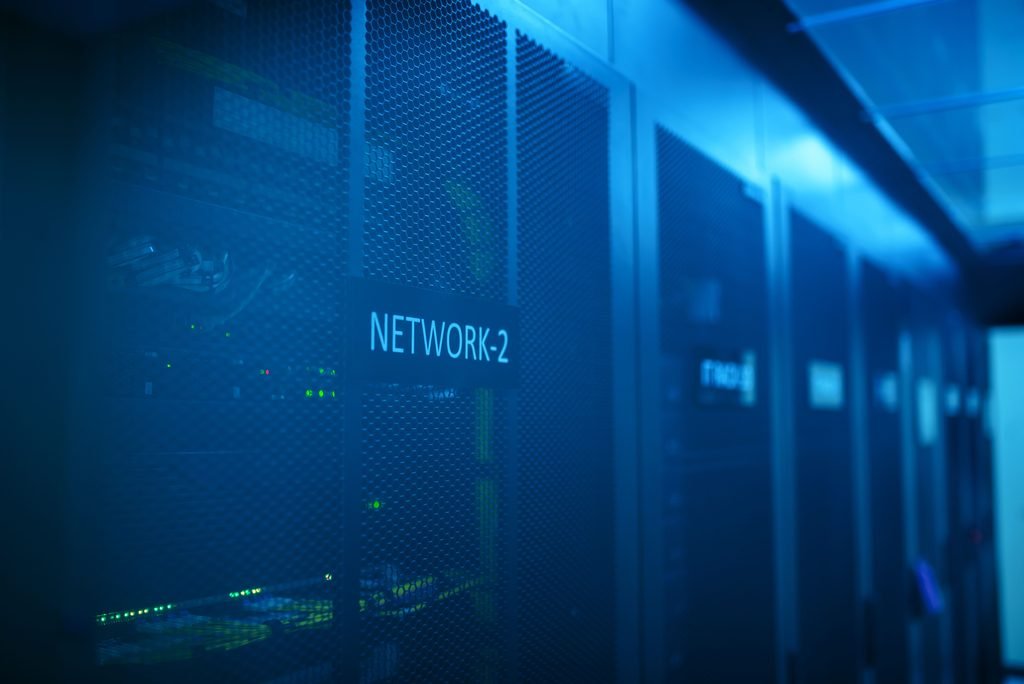
These methods can help manage heat more effectively in suitable environments. Nevertheless, the best cooling design depends on equipment specifications, facility conditions, water availability, and operating costs.
The ASHRAE AI Data Center Energy Performance Framework explains why energy and thermal efficiency are central considerations in modern AI facility design.
How Does an AI Data Center Work?
An AI data center brings computing hardware, data, networking, and software together to perform AI tasks. Although individual systems can differ, the overall process usually involves preparing data, processing it through AI models, and delivering results.
Step 1: Collecting and Preparing Data
AI systems need information to learn patterns and produce useful results. Therefore, the process often begins with collecting data from approved sources.
The data may come from documents, images, databases, sensors, or other digital systems. Before training begins, it may need cleaning, labeling, formatting, and validation.
In addition, data preparation helps reduce errors and improve the quality of information supplied to the model.
Step 2: Training the AI Model
During training, the AI model processes examples and adjusts its internal parameters to identify patterns. This stage can require substantial computing power, particularly when working with large models and extensive datasets.
GPUs and other accelerators perform many of the mathematical operations. Meanwhile, networking systems allow multiple processors to coordinate their work.
As training continues, the model gradually adjusts its parameters based on the training process. The goal is to develop a system that can recognize patterns and produce useful outputs when presented with new information.
Step 3: Testing and Evaluating the Model
After training, developers evaluate the model to understand how well it performs. They may test its accuracy, reliability, safety, and ability to handle unfamiliar information.
For example, a language model may be evaluated using questions that were not included in its training examples. Similarly, an image recognition model may be tested against images from different environments.
If the results reveal weaknesses, developers may adjust the model, improve the dataset, or repeat parts of the training process.
Step 4: Running AI Applications Through Inference
Once a model is ready for use, it can process new requests. This stage is called inference.
For example, when someone asks an AI chatbot a question, the system processes the request and generates a response. Likewise, an image recognition application may analyze a photograph and identify objects within it.
Inference can happen in large data centers, cloud environments, or other computing systems. Therefore, not every AI application requires a company to own its own facility.
AI Training vs. AI Inference: What Is the Difference?
Training and inference are two important AI workloads, but they serve different purposes.
AI training is the process of teaching a model by processing data and adjusting its parameters. It can involve long-running calculations, large datasets, and extensive computing resources.
AI inference happens when an already trained model uses what it has learned to respond to new information. For instance, generating text, summarizing a document, or recognizing an object in an image are inference tasks.
The infrastructure requirements can also differ. Training may require large clusters of accelerators working together, while inference systems must often focus on response speed, availability, and the cost of processing each request.
However, both workloads need reliable computing, networking, storage, and power. As AI adoption grows, data center operators must balance these requirements while managing operating costs.
Why Do AI Data Centers Consume So Much Energy?
Energy consumption is one of the biggest challenges associated with AI infrastructure. Powerful GPUs and other accelerators require electricity to perform calculations. Furthermore, networking equipment, storage systems, lighting, power distribution, and cooling add to the facility’s overall energy requirements.
As a result, the electricity demand of an AI data center depends on its size, hardware, workload, utilization, and cooling design.
The U.S. Department of Energy’s 2025 United States Data Center Energy Usage Report examines data center electricity use and the growing role of AI equipment. It also discusses how cooling systems and facility infrastructure contribute to overall energy consumption.
Understanding Power Usage Effectiveness (PUE)
One commonly used metric for evaluating data center infrastructure efficiency is Power Usage Effectiveness, or PUE.
The formula is:
PUE = Total Facility Energy ÷ IT Equipment Energy
For example, if a facility uses 1,200 units of electricity and its IT equipment consumes 1,000 units, its PUE is 1.2.
A lower PUE generally means that less energy is being used by supporting infrastructure relative to the energy consumed by computing equipment. However, PUE does not measure every aspect of environmental performance. It does not, by itself, explain how much useful AI work the facility delivers or how much water it consumes.
The U.S. Department of Energy’s Best Practices Guide for Energy-Efficient Data Center Design provides additional guidance on PUE and other efficiency measurements.
Water Use and Environmental Considerations
Cooling systems can also affect water consumption. Some facilities use water-based cooling technologies, while others rely on different cooling arrangements depending on local conditions and system design.
Consequently, water efficiency is an important consideration when planning new AI infrastructure. Operators must evaluate local water availability, cooling requirements, electricity sources, and environmental impacts.
At the same time, renewable electricity, efficient hardware, improved cooling, and better workload management can help reduce the environmental footprint of data center operations.
Nevertheless, no single efficiency metric tells the complete story. A responsible assessment should consider electricity use, water consumption, carbon emissions, hardware utilization, and the amount of useful computing work delivered.
Real-World Uses of AI Data Centers
AI data centers support many technologies that people and businesses use every day. As AI applications become more advanced, their computing requirements continue to expand.
Generative AI and Chatbots
Generative AI systems can create text, images, audio, video, and computer code. Chatbots, writing assistants, and AI-powered search tools rely on computing infrastructure to process user requests and generate responses.
Therefore, AI data centers help provide the computing capacity behind many generative AI services.
Healthcare and Scientific Research
Researchers use AI to analyze medical images, identify patterns in health data, support drug discovery, and accelerate scientific investigations.
For example, machine learning systems can help researchers examine large datasets that would otherwise take considerable time to analyze manually. However, medical applications require careful validation, privacy protection, and professional oversight.
Finance and Fraud Detection
Financial institutions can use AI to identify unusual transaction patterns, assess risks, and support customer service.
In addition, AI systems can analyze large volumes of information to help detect potentially suspicious activity. These applications depend on reliable infrastructure and appropriate data security controls.
Manufacturing and Industrial Operations
Manufacturers use AI for quality inspection, predictive maintenance, production planning, and automation.
For instance, computer vision systems can examine products on production lines and identify visible defects. Meanwhile, predictive models can analyze equipment data to help identify signs of potential failure.
Retail and Customer Experience
Retail businesses can use AI for product recommendations, demand forecasting, customer support, and inventory management.
As a result, AI infrastructure can help companies process information and improve digital services. However, businesses must also consider data privacy, accuracy, and responsible use.
Can Small Businesses Use AI Without Building a Data Center?
Yes. Most small businesses do not need to build or operate their own AI data centers to benefit from artificial intelligence.
Instead, they can access AI capabilities through cloud platforms, hosted AI services, and software applications. These providers operate the underlying infrastructure, allowing customers to use computing resources without purchasing and maintaining large hardware systems.
For example, a small business may use AI tools to draft marketing content, summarize documents, analyze customer feedback, or automate routine tasks.
Cloud-based services can also provide flexibility. Businesses can select tools according to their needs and pay for subscriptions or usage rather than investing in a dedicated facility.
However, companies should evaluate pricing, data privacy, security, reliability, and vendor terms before choosing a service. In particular, sensitive business information should only be shared with platforms that meet the organization’s security and compliance requirements.
For many smaller organizations, using existing AI services is more practical than purchasing specialized servers and managing complex cooling and electrical systems.
What Should Businesses Consider Before Investing in AI Infrastructure?
Organizations considering an AI infrastructure investment should begin with their actual computing requirements. Building a facility without a clear understanding of workload demand can create unnecessary expenses.
First, identify whether the organization needs AI training, inference, or both. These workloads can have different hardware and performance requirements.
Next, estimate the amount of computing capacity needed. Consider the number of users, expected data volume, processing speed, and future growth.
Furthermore, evaluate the total cost of ownership. Hardware purchases are only one part of the investment. Electricity, cooling, networking, maintenance, staffing, software, and facility upgrades can also contribute to long-term costs.
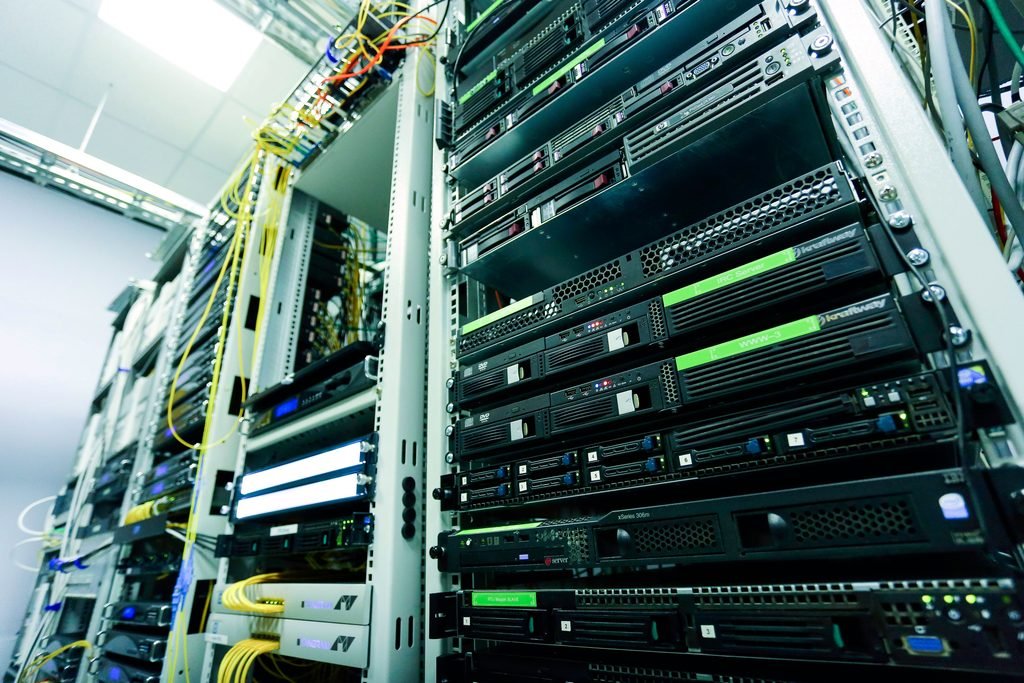
Security is another essential factor. AI infrastructure may process confidential business information, customer records, or proprietary datasets. Therefore, organizations need suitable access controls, data protection measures, and monitoring.
Finally, compare building infrastructure with using cloud or managed services. For some organizations, owning specialized hardware may make sense. For others, renting computing capacity can offer greater flexibility and reduce upfront investment.
The Future of AI Data Centers
AI data centers are likely to continue evolving as models become more capable and businesses adopt AI across more industries.
One important development is the growing use of specialized AI processors. New accelerators and processor architectures aim to improve computing performance and energy efficiency. At the same time, high-speed networking and advanced memory technologies are helping large systems exchange information more effectively.
Cooling technology is also changing. Direct-to-chip liquid cooling and other thermal management approaches are becoming increasingly important for high-density computing environments.
In addition, operators are paying more attention to electricity availability, renewable energy, and facility efficiency. These considerations matter because a data center must have enough reliable power to support its computing workloads.
Another development is the growth of inference infrastructure. As more people use AI applications, providers must deliver responses quickly and reliably. Consequently, data center design will need to support both large-scale model development and everyday AI services.
Ultimately, the future of AI infrastructure will depend not only on more powerful processors but also on efficient system design, responsible resource use, reliable operations, and practical business needs.
Frequently Asked Questions About AI Data Centers
1. What is an AI data center in simple terms?
An AI data center is a specialized facility containing powerful computers, networking equipment, storage systems, electricity infrastructure, and cooling technology. It provides the computing resources needed to train AI models and run AI applications.
2. What is the main purpose of an AI data center?
Its main purpose is to provide the computing power and supporting infrastructure required for artificial intelligence. For example, it can support machine learning, generative AI, large language models, image recognition, and other demanding workloads.
3. What hardware is used in AI data centers?
AI data centers commonly use GPUs, specialized AI accelerators, CPUs, high-performance memory, storage devices, and networking equipment. They also require electrical distribution and cooling systems to keep the hardware operating reliably.
4. Why do AI data centers need advanced cooling?
AI processors generate substantial heat while performing intensive calculations. Therefore, cooling systems help maintain suitable operating temperatures, protect equipment, and reduce the risk of performance problems or hardware damage.
5. Are AI data centers the same as cloud data centers?
Not exactly. Cloud data centers provide computing, storage, and networking services over the internet. Some cloud facilities are designed specifically to support AI workloads, while others handle a broader range of applications. In practice, an AI data center can be part of a cloud provider’s infrastructure.
6. Can small businesses access AI data centers?
Yes. Small businesses can access AI computing through cloud platforms, hosted AI services, and subscription-based applications. As a result, they can use many AI capabilities without building or maintaining their own data center.
7. Are AI data centers environmentally friendly?
Their environmental impact depends on electricity sources, hardware efficiency, cooling methods, water use, and operational practices. Although efficient technology and renewable energy can help reduce their impact, AI data centers still require careful resource management.
Conclusion
Understanding what is an ai data center helps explain the infrastructure behind today’s artificial intelligence systems. These facilities combine powerful processors, high-speed networks, large-scale storage, reliable electricity, and advanced cooling to support demanding AI workloads.
Moreover, AI data centers are becoming increasingly important across healthcare, finance, manufacturing, retail, scientific research, and digital services. However, their growth also creates challenges involving energy consumption, water use, infrastructure costs, and environmental responsibility.
For most small businesses, accessing AI through cloud platforms and hosted services is a practical way to benefit from this technology. Meanwhile, organizations with specialized computing needs must carefully evaluate performance, security, efficiency, and long-term costs before investing in dedicated infrastructure.
Ultimately, AI data centers are more than buildings filled with servers. They are the computing foundation that helps turn artificial intelligence from software concepts into real-world applications.



3 responses to “What Is an AI Data Center? Inside the Infrastructure Powering AI”
[…] these differences is important. This guide examines actual research, daily consumption estimates, data center operations, and the technologies that could make […]
[…] Nevertheless, these applications require careful oversight. A computer-generated result is not automatically a medical diagnosis. Healthcare professionals must consider symptoms, patient history, physical examinations, and other clinical evidence before making decisions. […]
[…] The study is useful because it demonstrates that digital consumption has a measurable environmental footprint and that electricity decarbonization can reduce some of its climate impacts. […]